Fractional CMO & Agency Alternatives — The Operator-Led Model
Fractional CMOs sell strategy decks. Agencies sell hours. Neither model fits a $1M–$10M ARR B2B SaaS founder who needs a forecast they can defend, a paid program that compounds, and lifecycle email that ships this week. The Operator-Led Growth model — one senior operator owning positioning, paid acquisition, lifecycle email, copy, analytics, forecasting, and weekly optimization — replaces the translation layer between consultant and execution team. This section covers the model itself, why consultants ship decks while operators ship DPI, what one operator with an AI scale layer actually produces in a week, and how the model translates from B2B SaaS to DTC. Start with the Operator-Led Growth piece for the framework; the operator-vs-consultant piece for the diagnosis; the One-Person Agency piece for the execution proof.
Go-to-Market Strategy Is Five Decisions, Not Forty Slides
Segment, claim, channel, motion, economics. Each one has a failure mode attached, and the right-hand column of that table is a diagnostic: when growth is stuck, the symptom names the decision you skipped.
A Positioning Statement That Survives Your Sales Calls
Write the opposite of your statement. If no serious company would ever claim it, yours asserts nothing. The four-slot template, three worked examples, and why hyperbole cannot constrain anything.
The Three Jobs AI Does Well in Marketing, and the Three It Doesn't
Organised by job rather than by vendor, because the vendor list turns over every quarter and the jobs do not. Plus the one question that disqualifies most AI marketing platforms in about a minute.
What a Fractional CMO Actually Does All Month
The plain-English definition, a real month of the work broken out hour by hour, and the structural limit nobody prints on the sales page: strategy is included, execution is not.
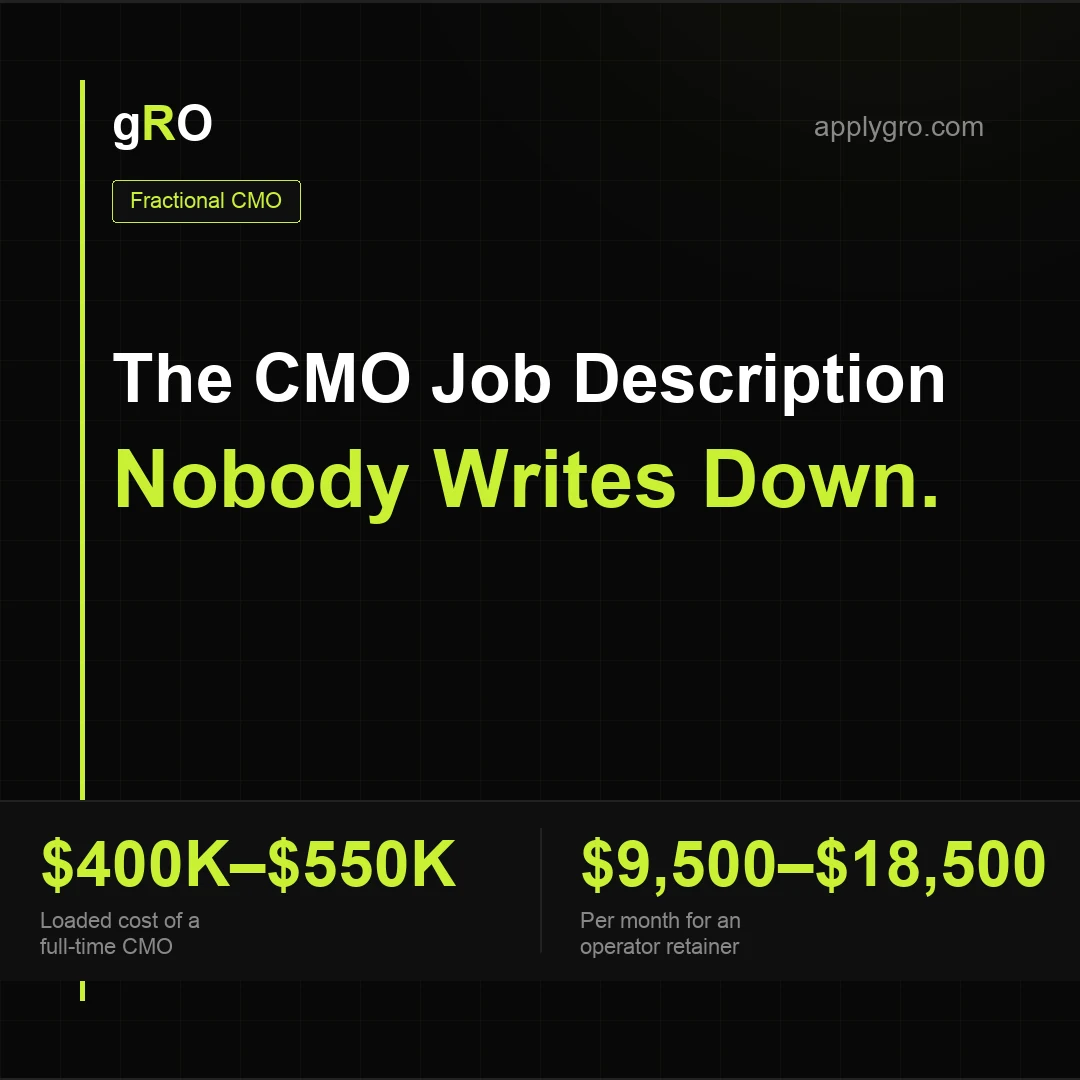
The CMO Job Description Nobody Writes Down
Revenue narrative, org design, budget allocation, board reporting. The real chief marketing officer job, and a table showing who actually does the hands-on work once you have hired one.
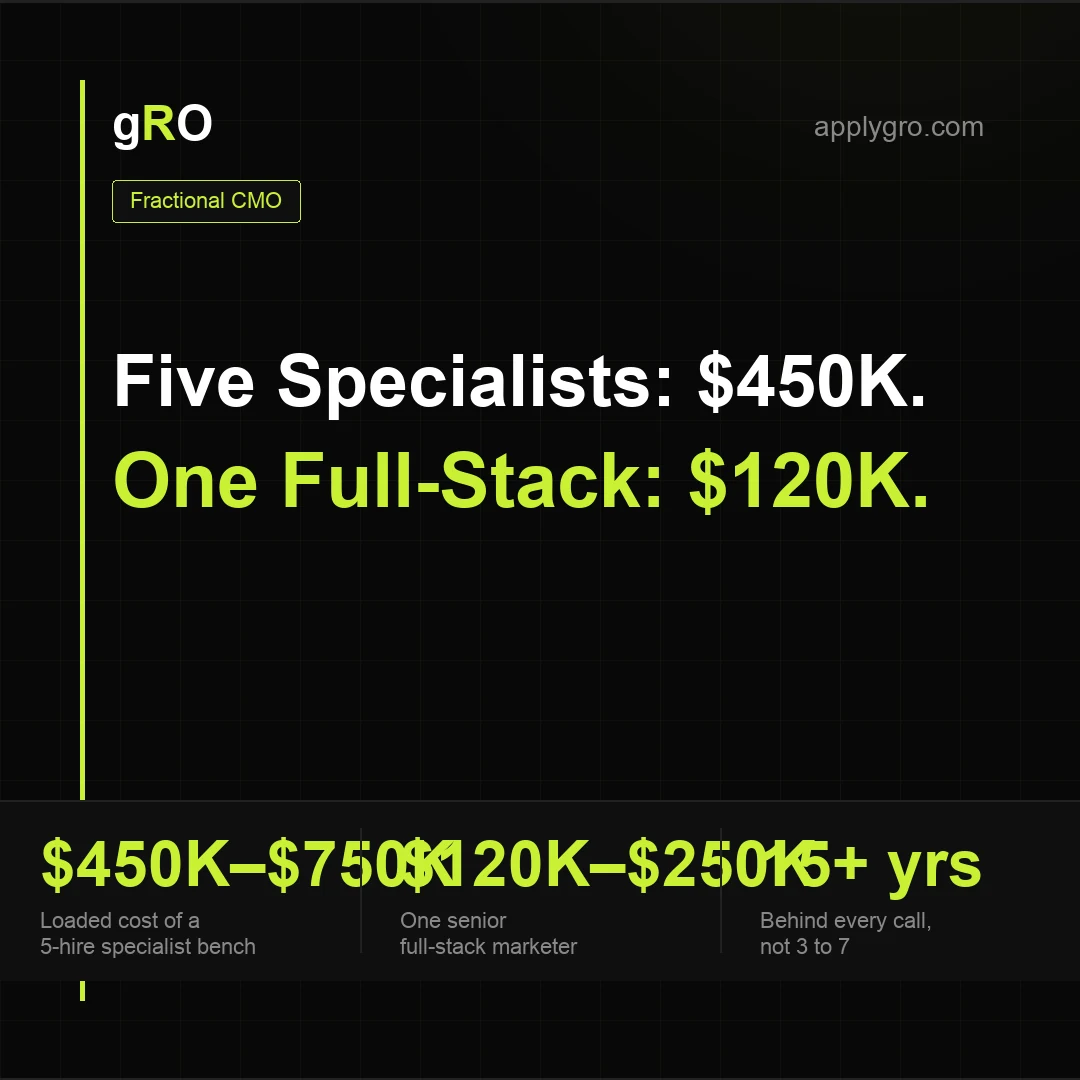
Five Specialists at $450K, or One Full-Stack Marketer at $120K
The name for a marketer who covers the whole stack, the six systems they have to run, and the 2026 economics of one senior generalist against a bench of five specialists.
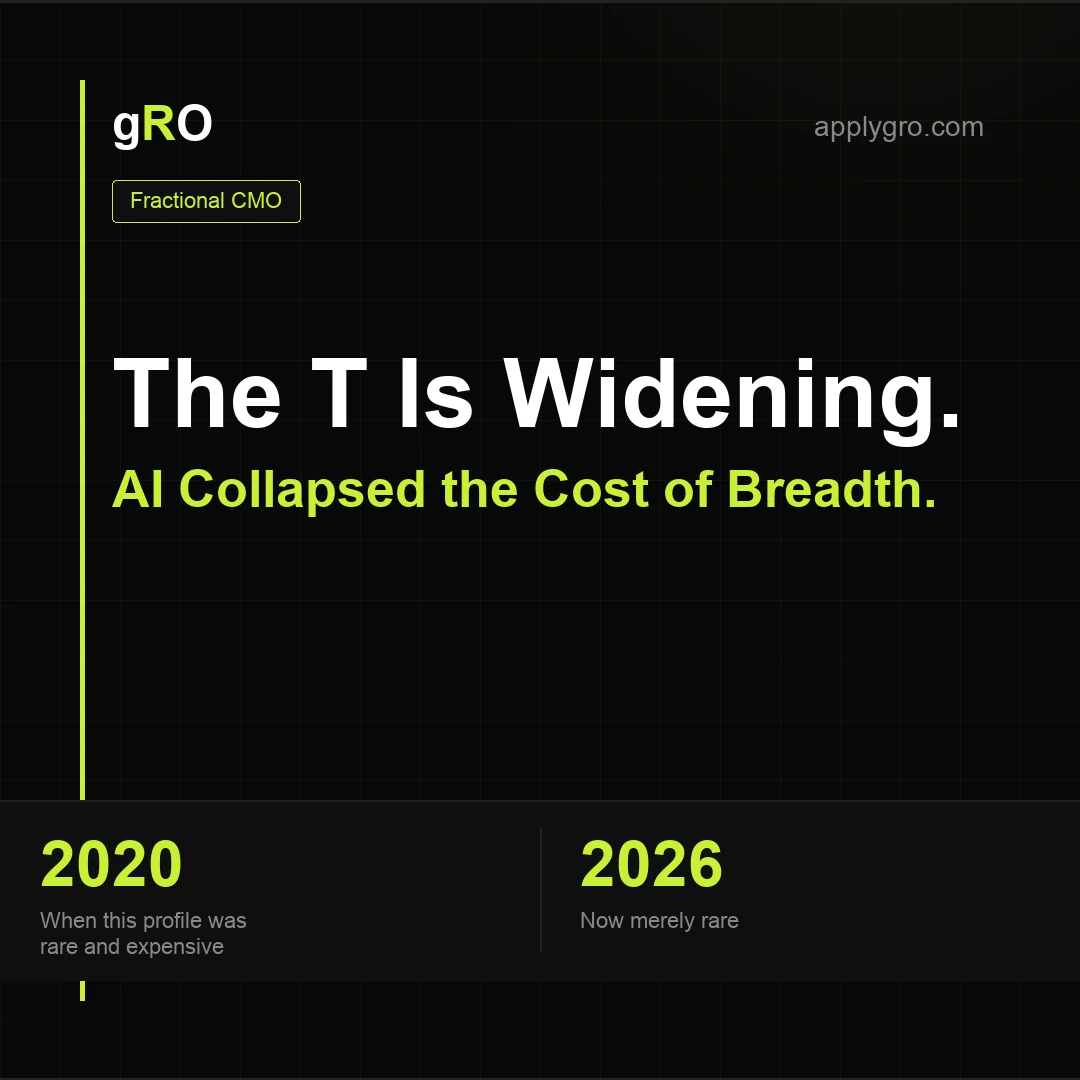
The T-Shaped Marketer Is Widening Into a Full Stack
The definition, the classic skill map, and the 2026 thesis: AI collapsed the cost of breadth, so the T is widening for anyone with the depth to direct it.
The Future of Marketing: What 2027 Looks Like From Inside the Work
Four eras of marketing, five falsifiable predictions for 2027, and what the shift means for agencies and for jobs — written by an operator running the model, not forecasting it.
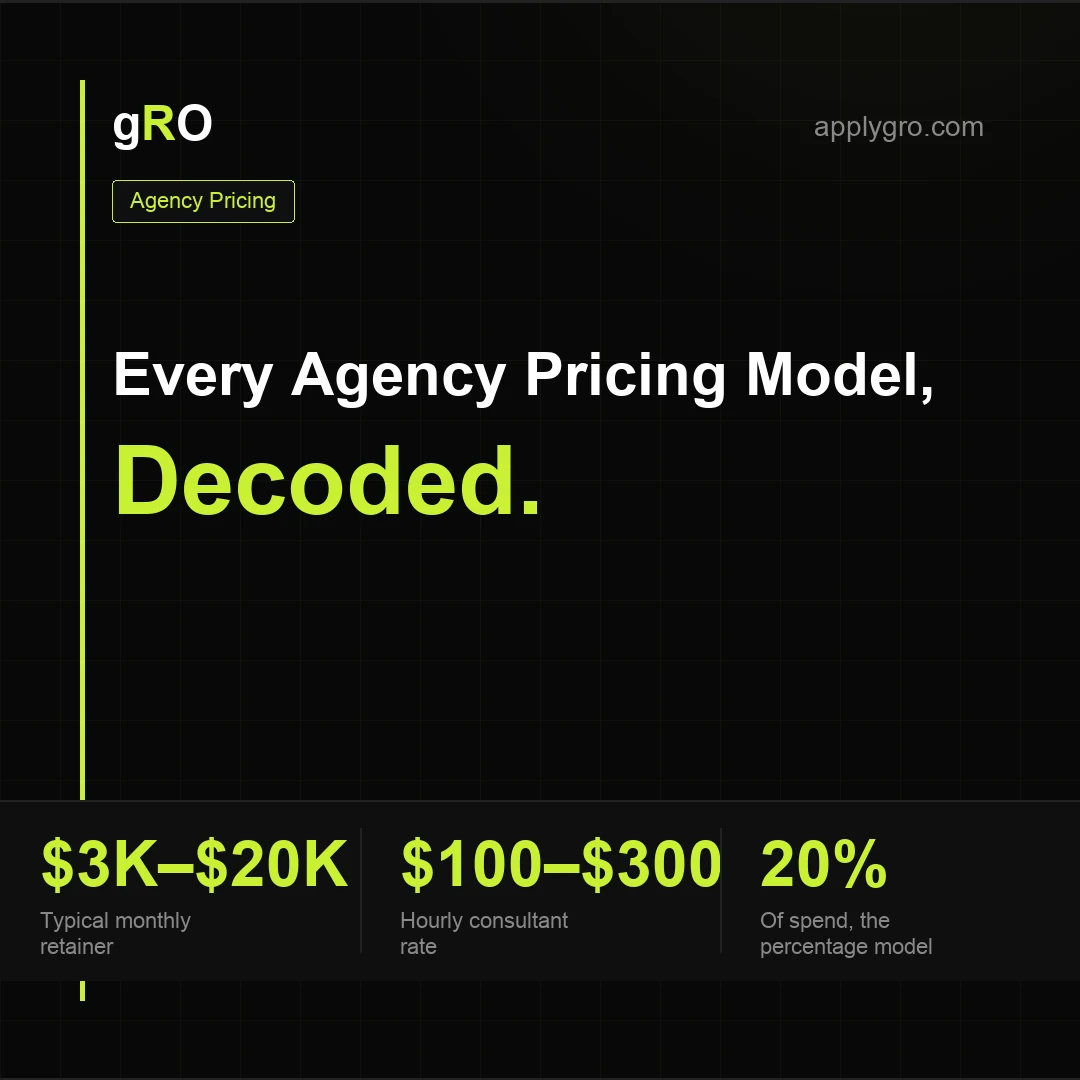
What Marketing Agencies Charge in 2026, Every Model Decoded
The complete 2026 rate card: retainers, hourly, project fees, percentage of spend and performance deals, with what each model costs, what it actually buys, and who it quietly favours.
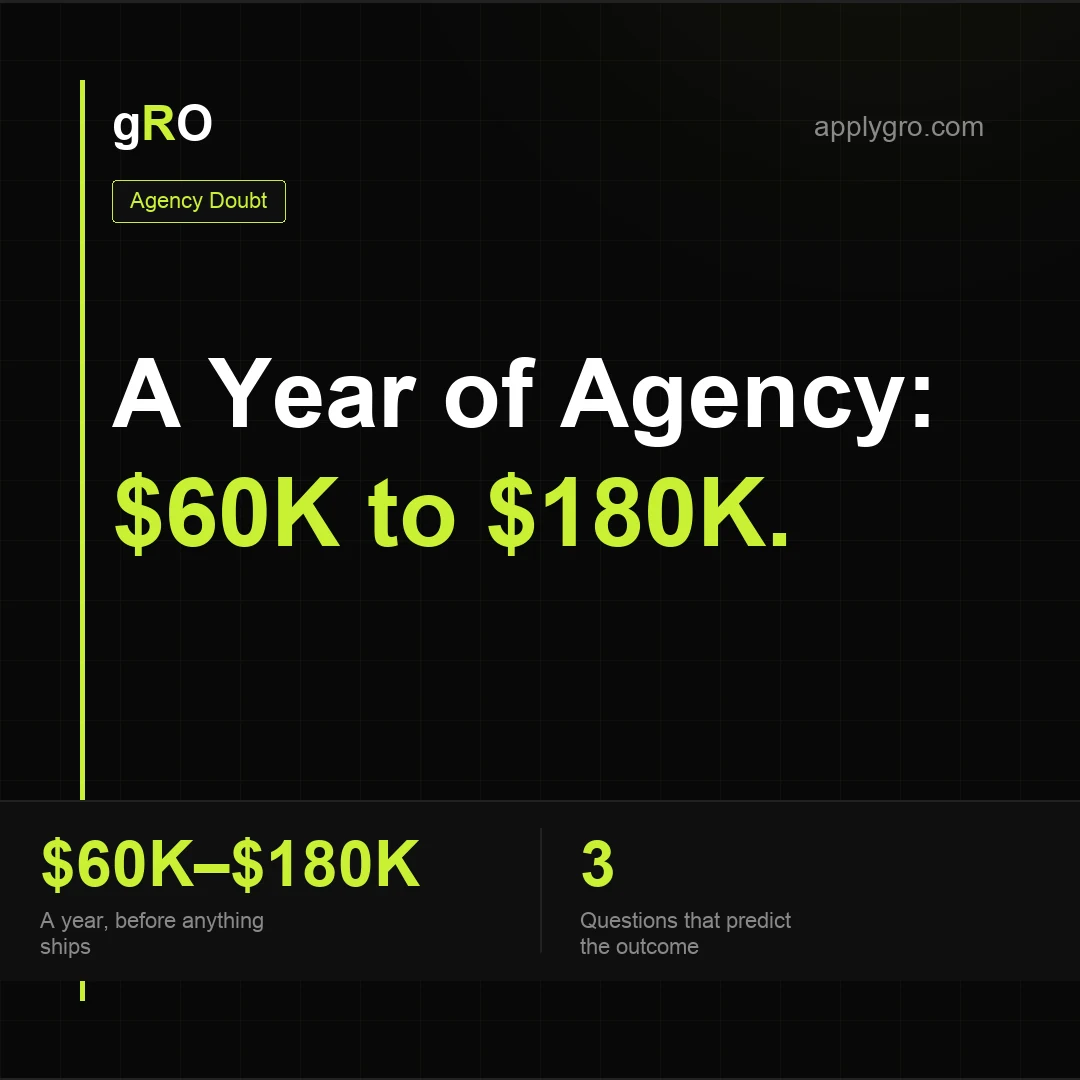
Is a Marketing Agency Worth It? The Math Nobody Selling One Will Do
You are probably here mid-doubt: about to sign, or about to fire. This runs the actual numbers, gives you the three questions that predict the outcome, and saves the pitch for the very end.

In-House vs. Agency: Run the Numbers Before You Pick a Side
One loaded-cost table, five columns nobody puts side by side — monthly cost, senior time, execution, ramp, walk-away risk — then an honest accounting of what each option really buys.

Hiring a Small Business Marketing Consultant? Read This First
The rates, the deliverables that actually matter, and the five questions that separate a consultant who moves revenue from one who sells you a deck and disappears.
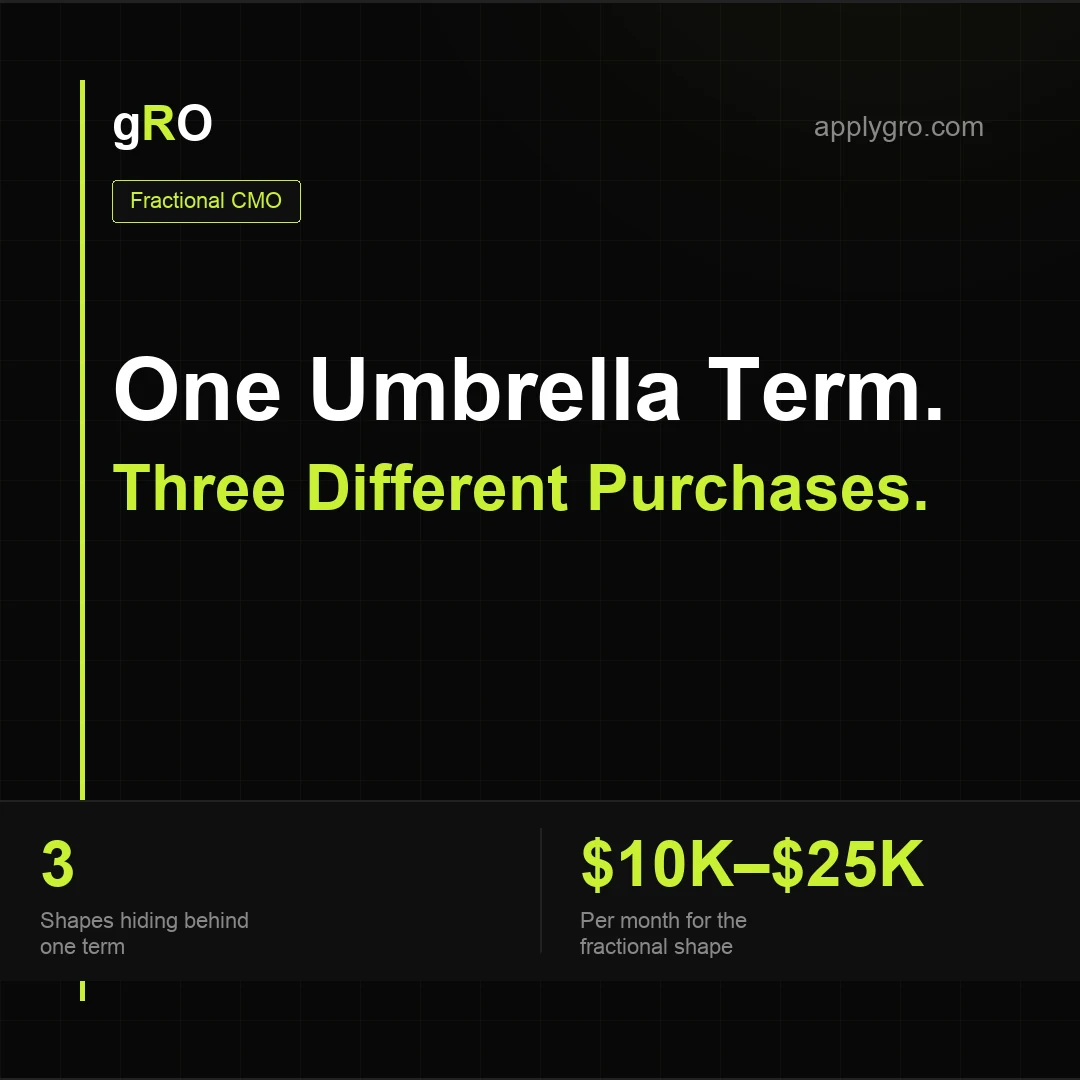
The Outsourced CMO: One Term, Three Very Different Purchases
What each shape of CMO outsourcing costs in 2026, what each one actually delivers, and exactly where the execution gap opens once the strategy is handed over.
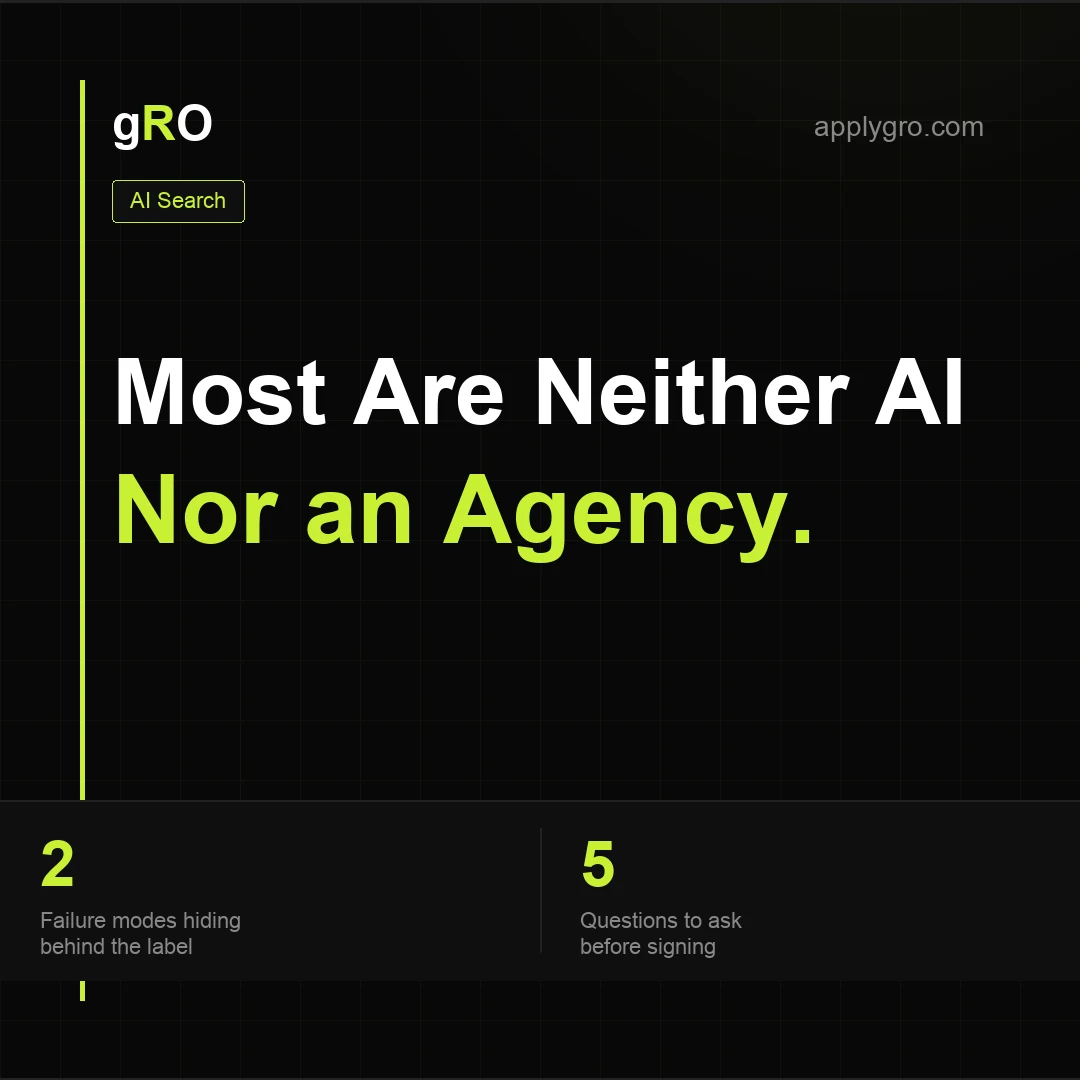
Most AI Marketing Agencies Are Neither AI Nor an Agency
The label is unregulated and the market knows it. What the term should mean, the two failure modes hiding behind it, and the five questions that separate the real from the wrapper.
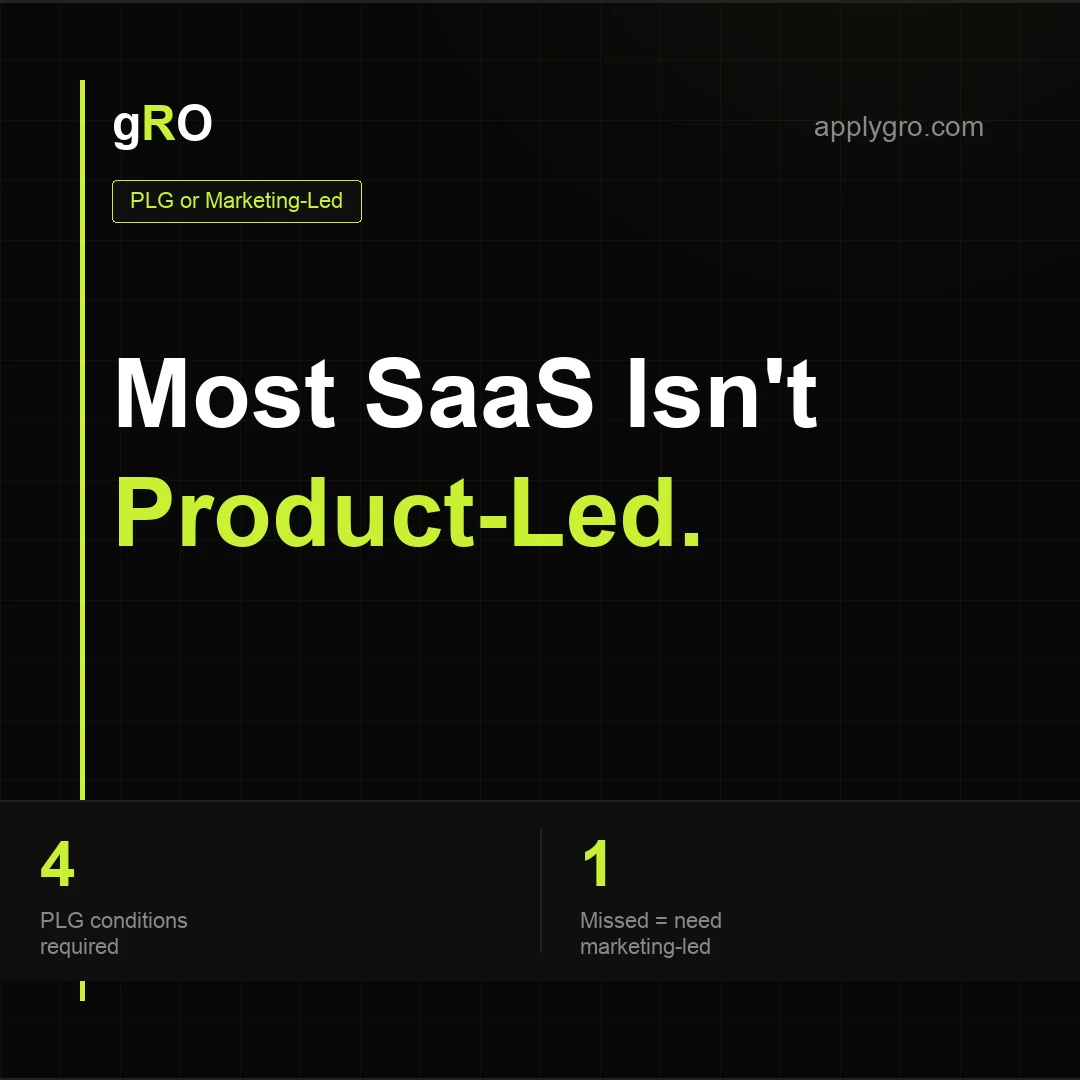
PLG vs Marketing-Led Growth.
Product-led growth only works under four conditions. Most $1M–$10M B2B SaaS miss at least one — which means the product won't sell itself and marketing has to drive demand.
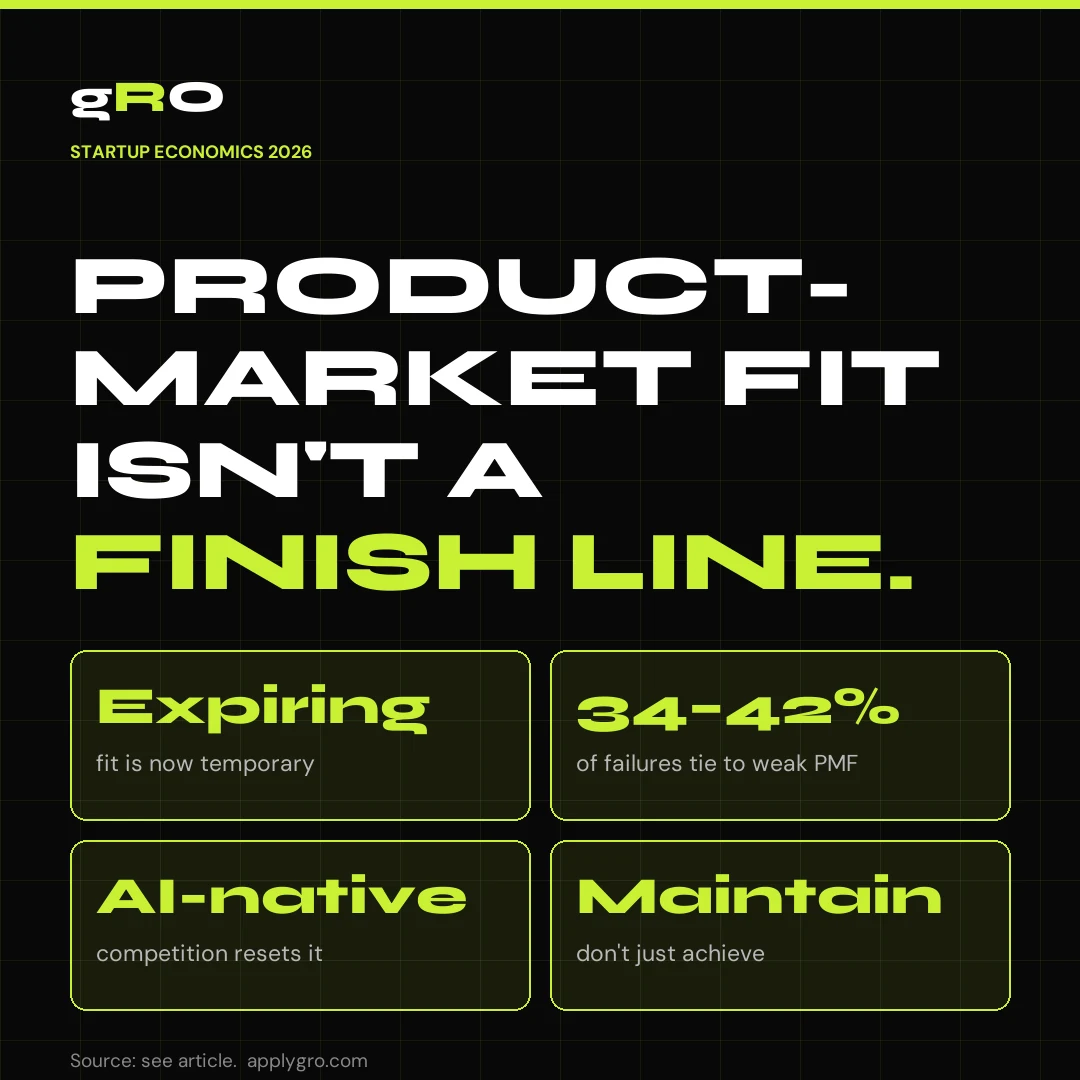
Product-Market Fit Isn't a Finish Line.
You were taught to find PMF once and protect it. In 2026 that model is breaking — fit is a temporary state that expires as AI-native competition resets positioning. Why PMF is now a maintained position, re-earned every quarter.
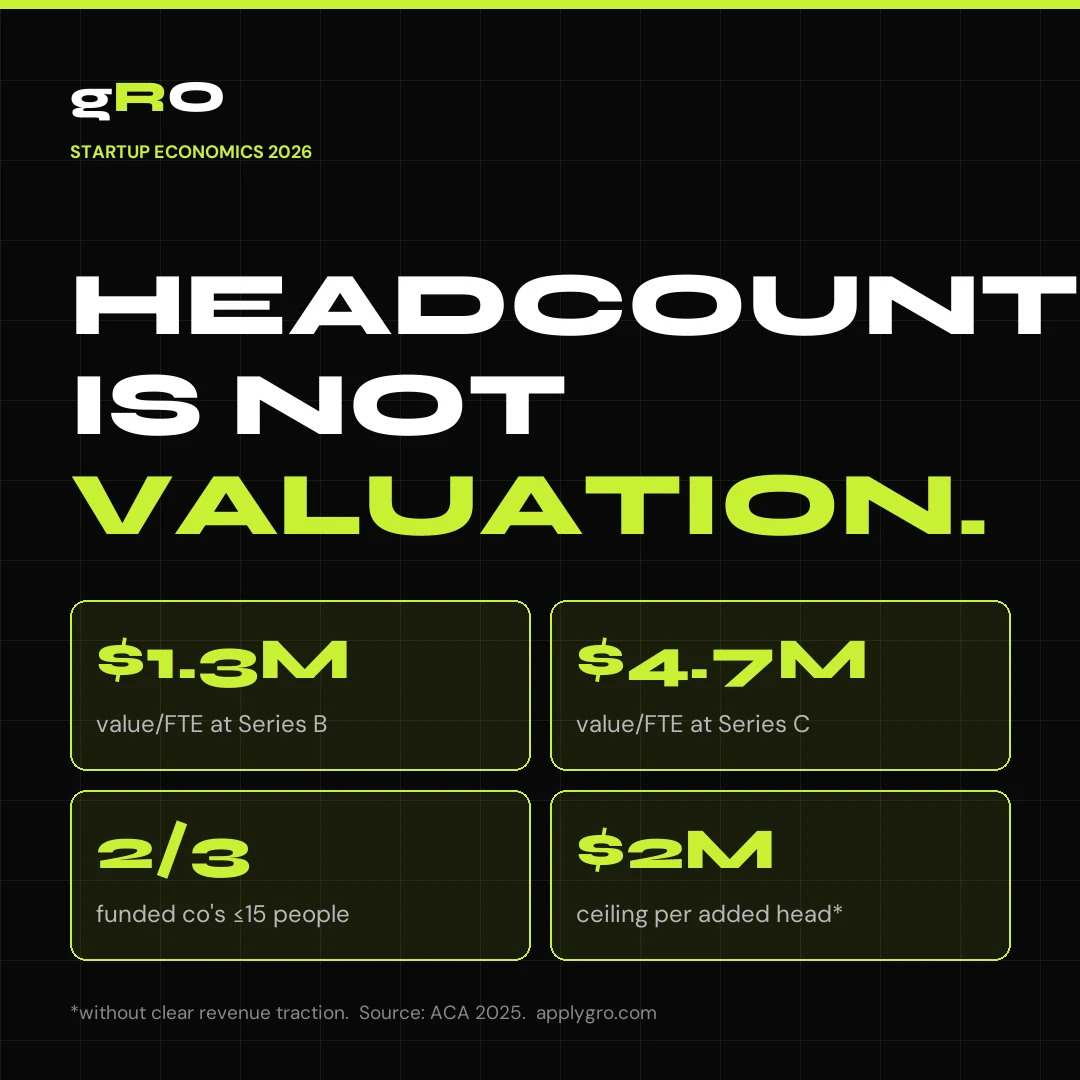
Headcount Is Not Valuation.
Angel investors funded ~1,000 startups in 2024. Valuation per employee is flat until Series C, dips at Series B as companies bulk up on go-to-market hires, and two-thirds of funded companies run on ≤15 people. The market prices output density, not headcount.
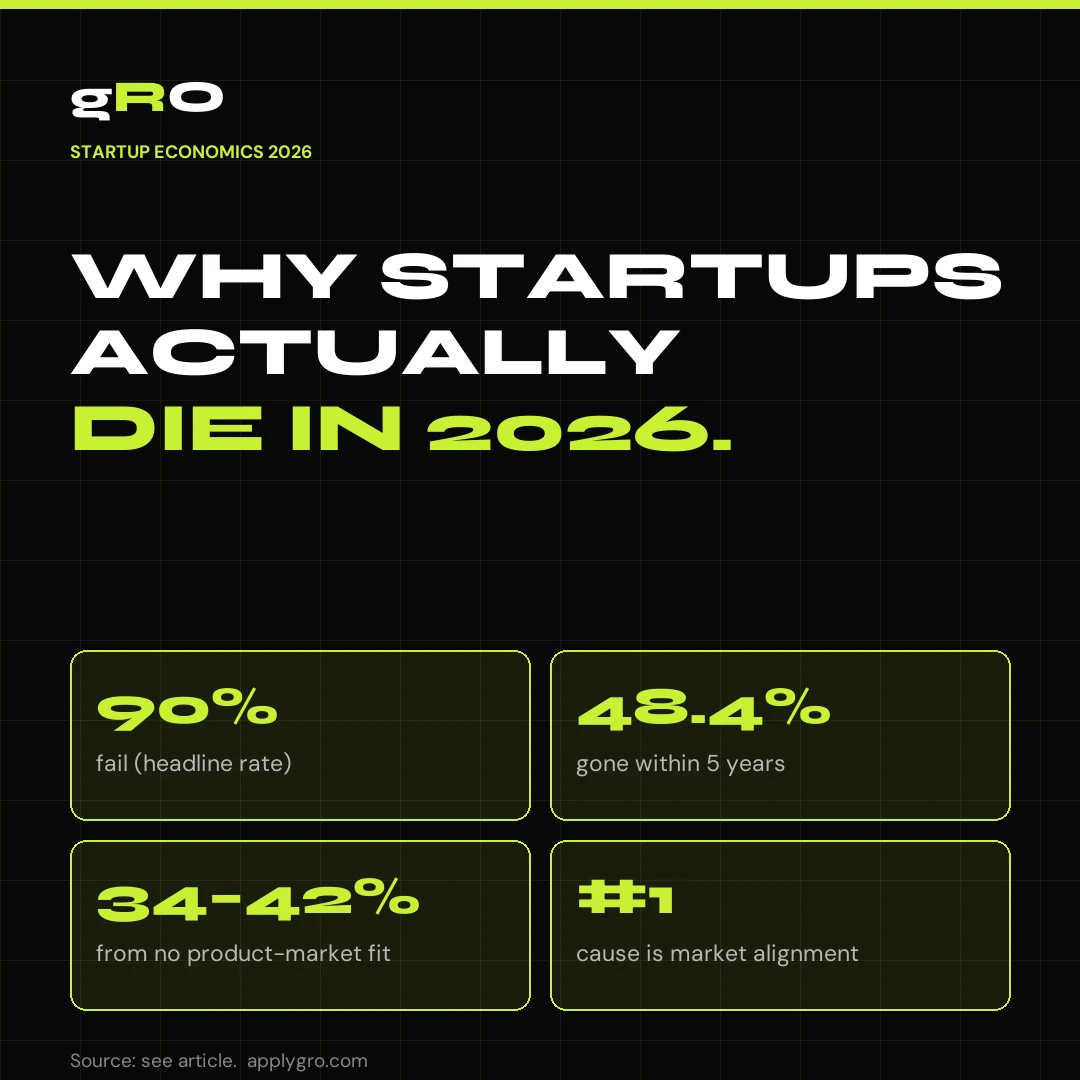
Why Startups Actually Die in 2026.
The autopsy almost never reads "couldn't build it." 90% fail; 48.4% within five years; no product-market fit is the #1 cause (34–42%). Startup death is a go-to-market problem wearing a product costume — and most of it is preventable.
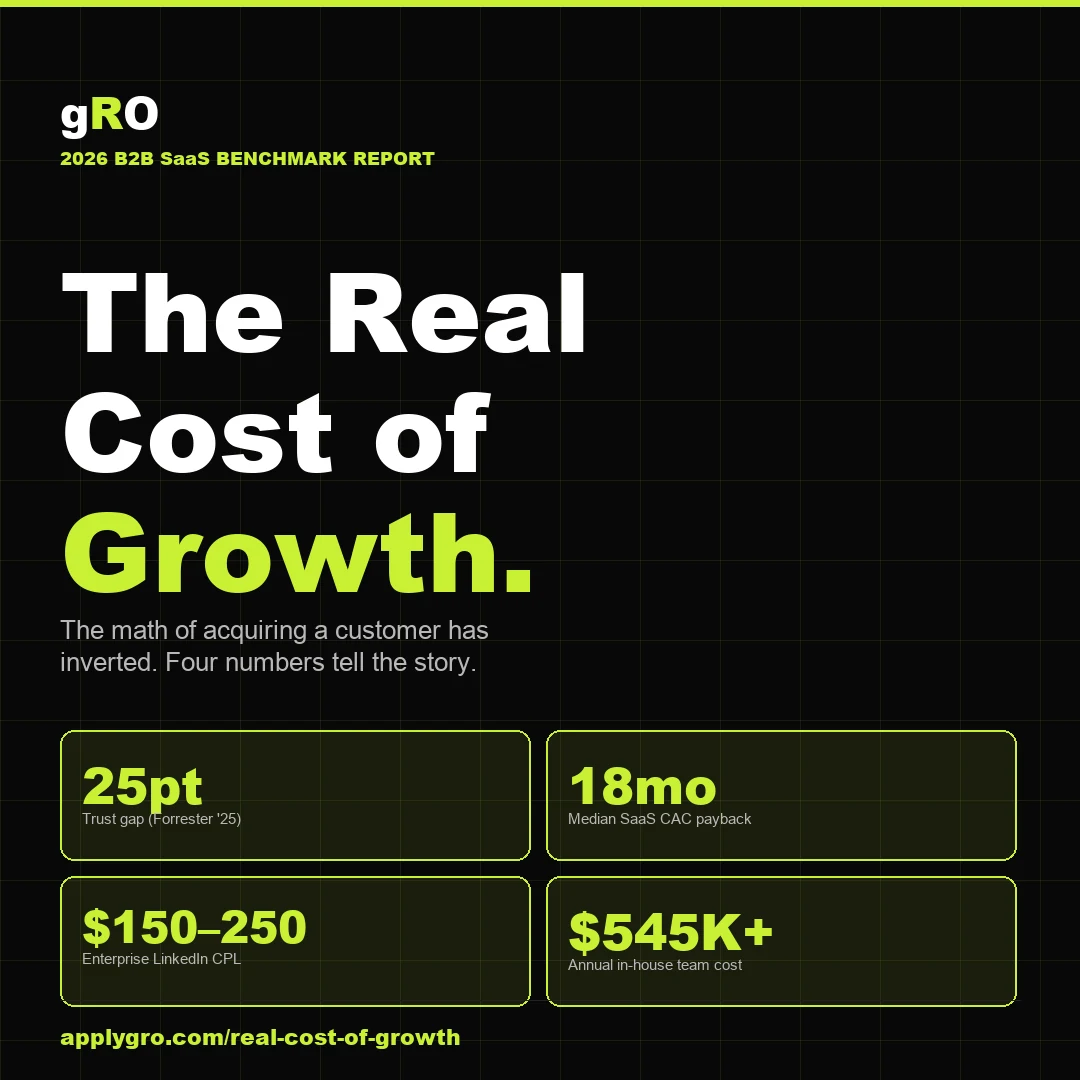
The Real Cost of Growth: Why $1M–$10M ARR Founders Are Paying More for Less.
A 2026 B2B SaaS benchmark report. Why the math of acquiring a customer has inverted — 25-pt trust gap, 18-mo CAC payback, $150–250 enterprise CPL, $408K+ in-house team cost — and the operator-led model rewriting it. Every benchmark independently sourced. Includes the free PDF.
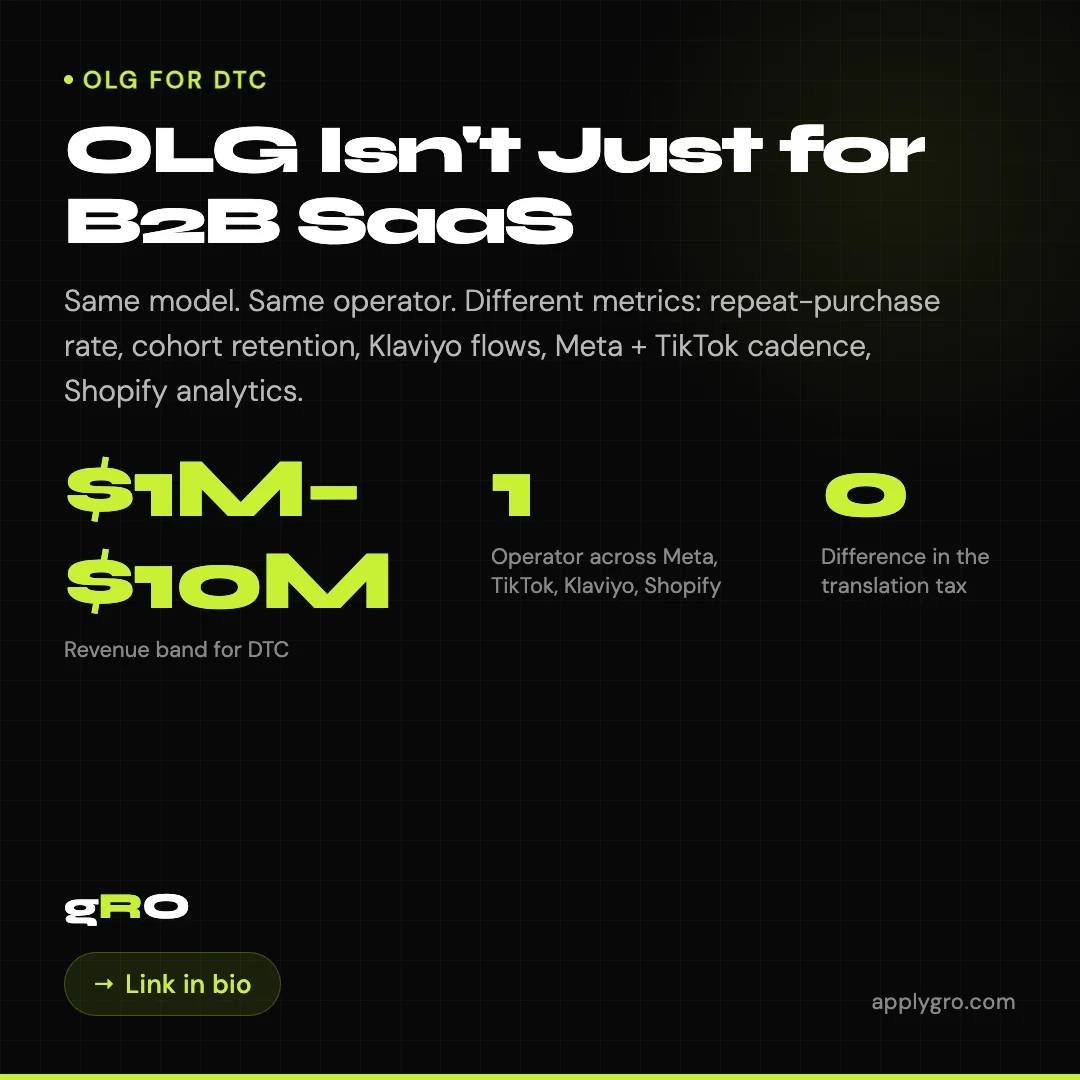
OLG Isn't Just for B2B SaaS.
Same model. Same operator. Different metrics: repeat-purchase rate, cohort retention, Klaviyo flows, Meta + TikTok cadence, Shopify analytics.
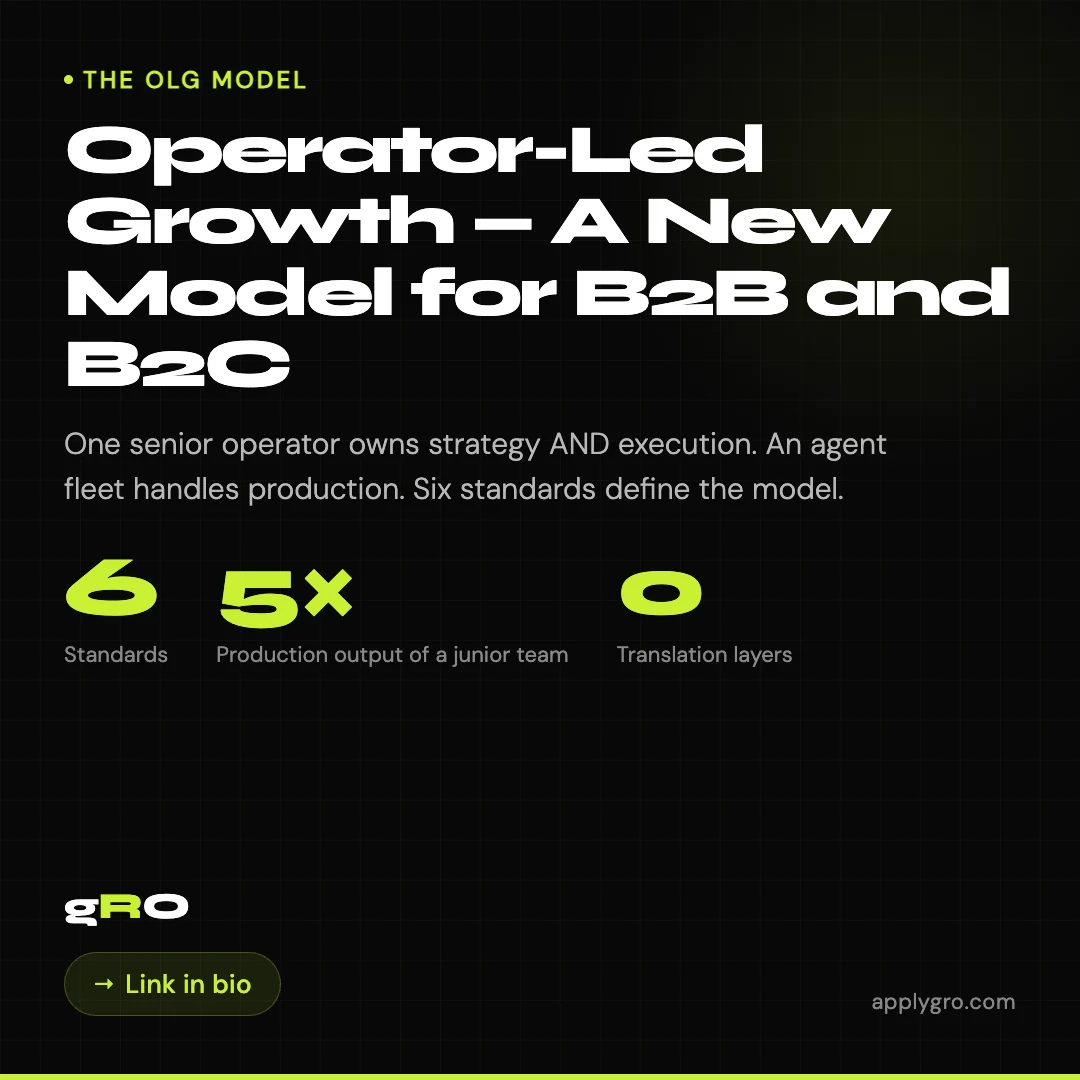
Operator-Led Growth — A New Model for B2B and B2C.
A new model for $1M–$10M founders. One senior operator owns strategy AND execution. An agent fleet handles production. Six standards define the model.
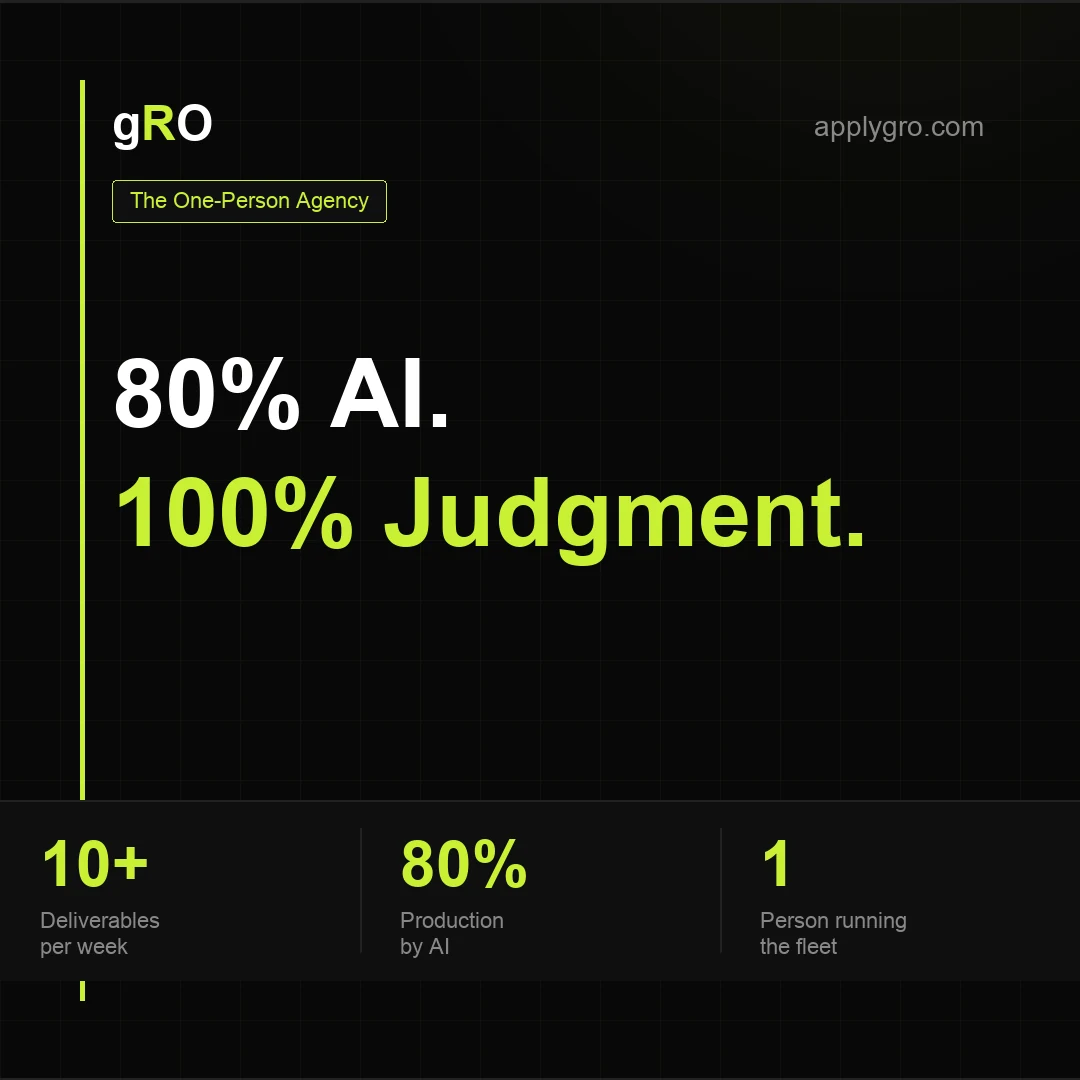
80% AI. 100% Judgment.
What one operator actually ships in a week when the workflow is built right. The stack, the prompts, the judgment calls.
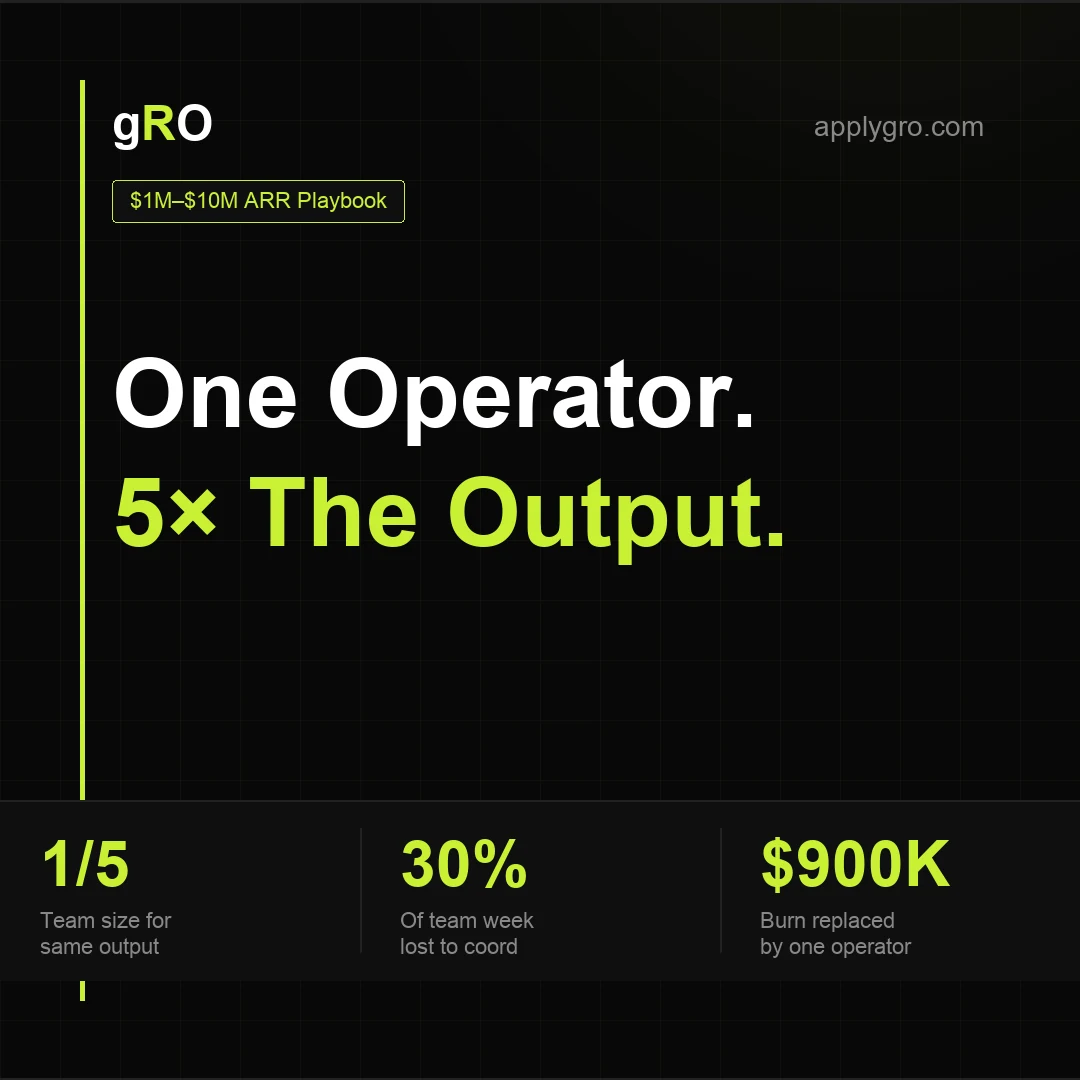
One Operator. Five Marketers of Output.
The $1M–$10M ARR growth manual — same output as a 5-person team without the $900K burn or coordination tax.
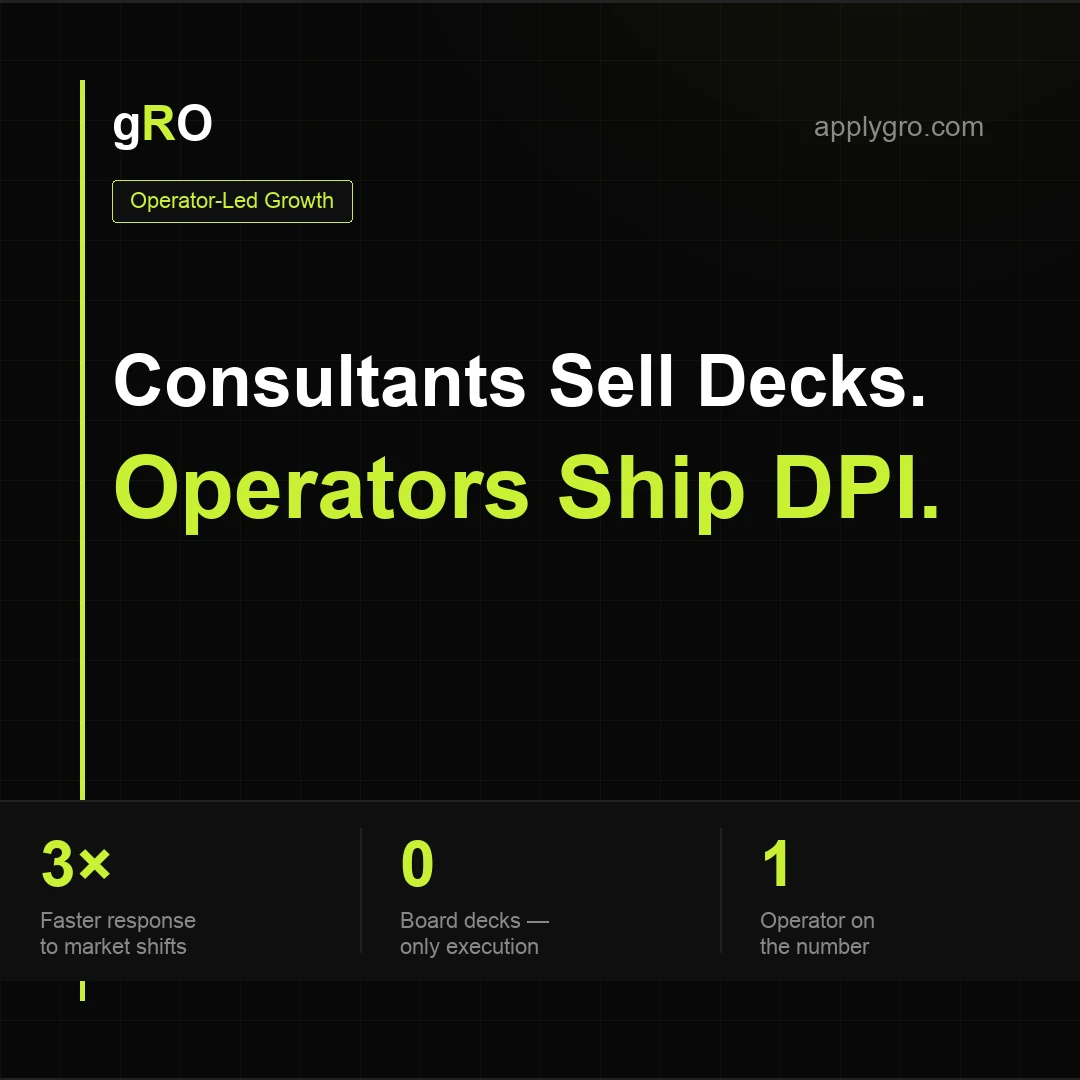
Consultants Sell Decks. Operators Ship DPI.
Why the pretty strategy deck breaks on contact with a hiring freeze, a budget cut, and a CAC spike — and what replaces it.
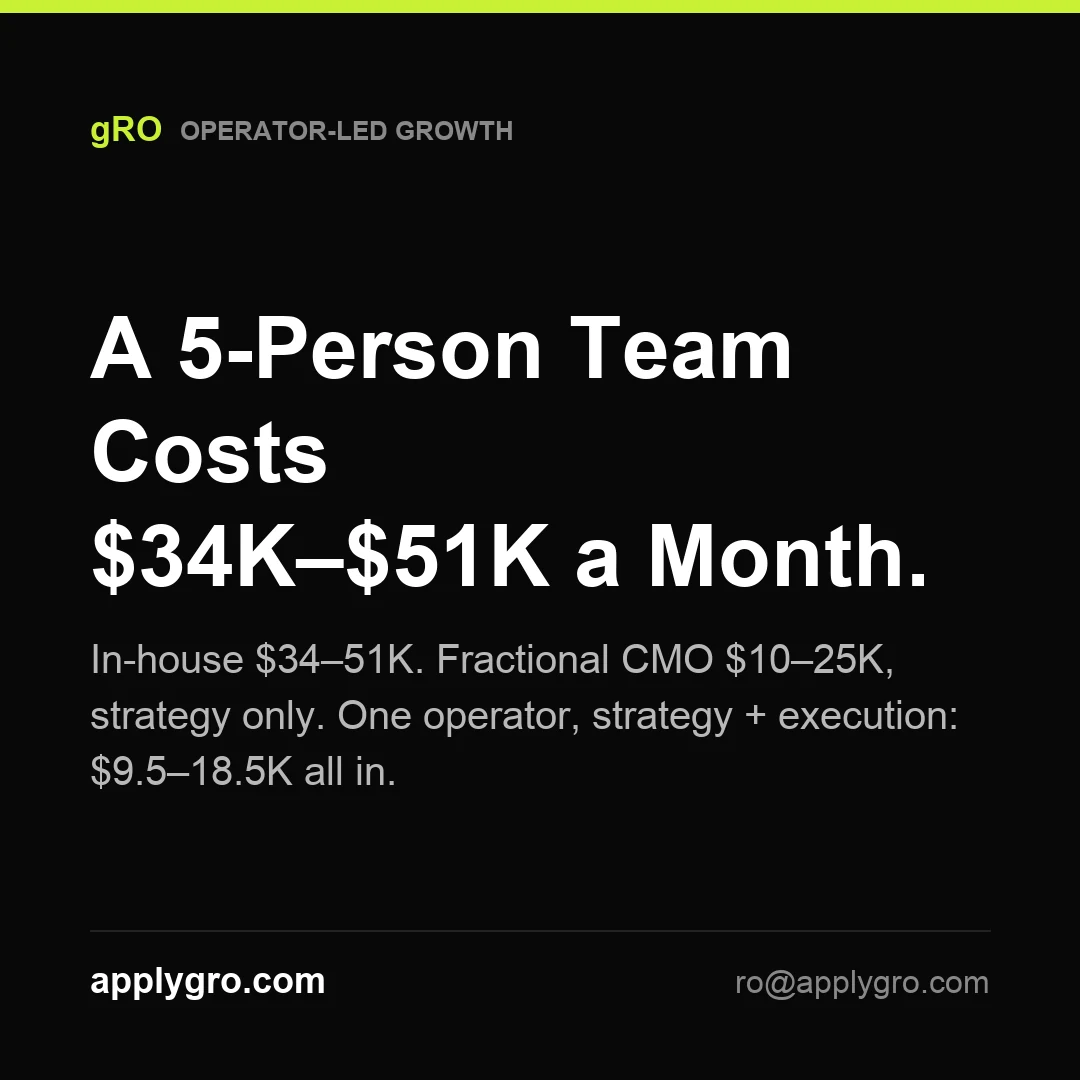
A 5-Person Marketing Team Costs $34K–$51K a Month.
In-house team: $34–51K/mo. Fractional CMO: $10–25K/mo for strategy only. One senior operator, strategy and execution: $9,500–$18,500 all in — published price. The real cost comparison.
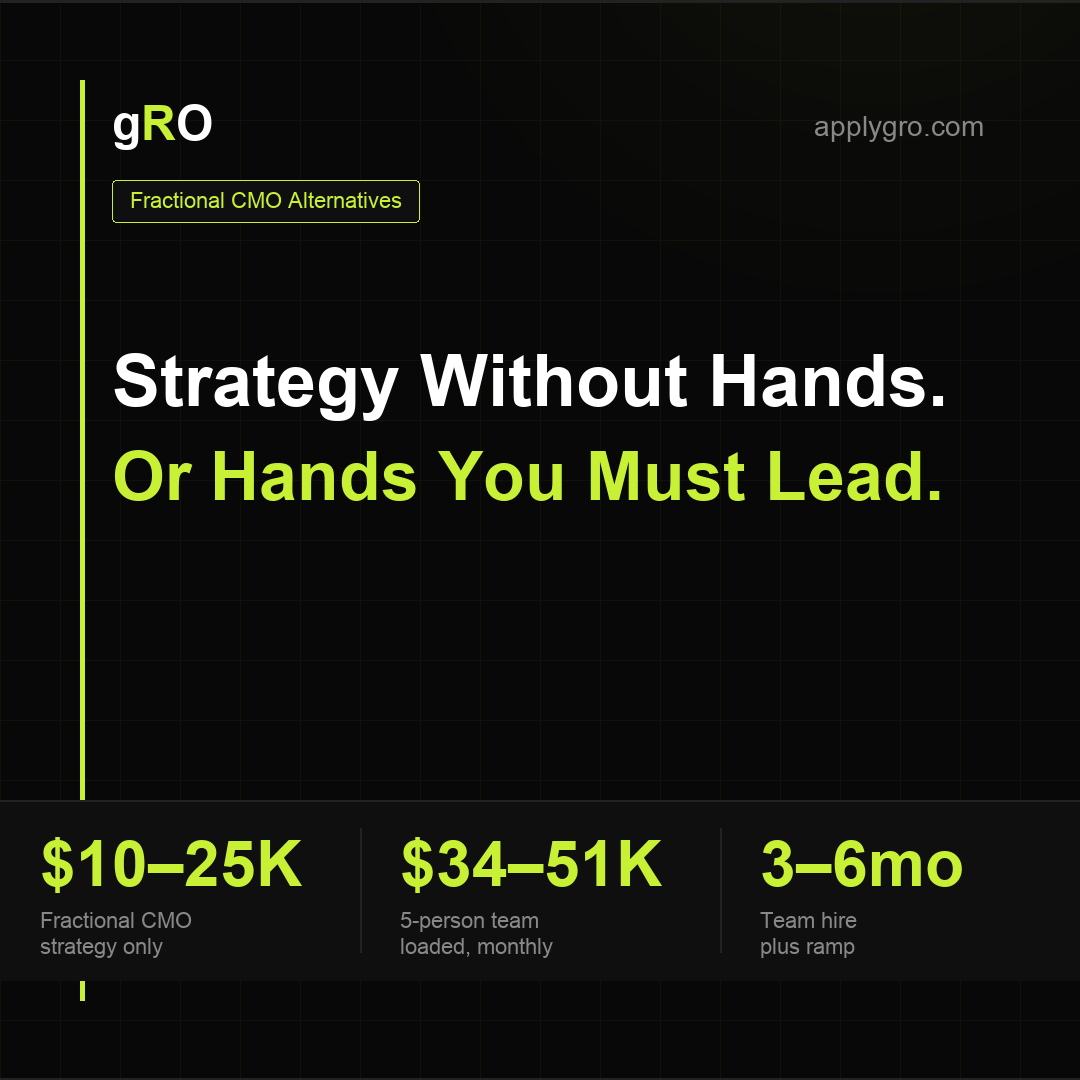
Fractional CMO vs In-House Team: The Honest Comparison.
A fractional CMO ($10–25K/mo) buys strategy without hands. An in-house team ($34–51K/mo loaded) buys hands you still have to lead. The cost table, the ramp reality, and the trap in choosing between them.
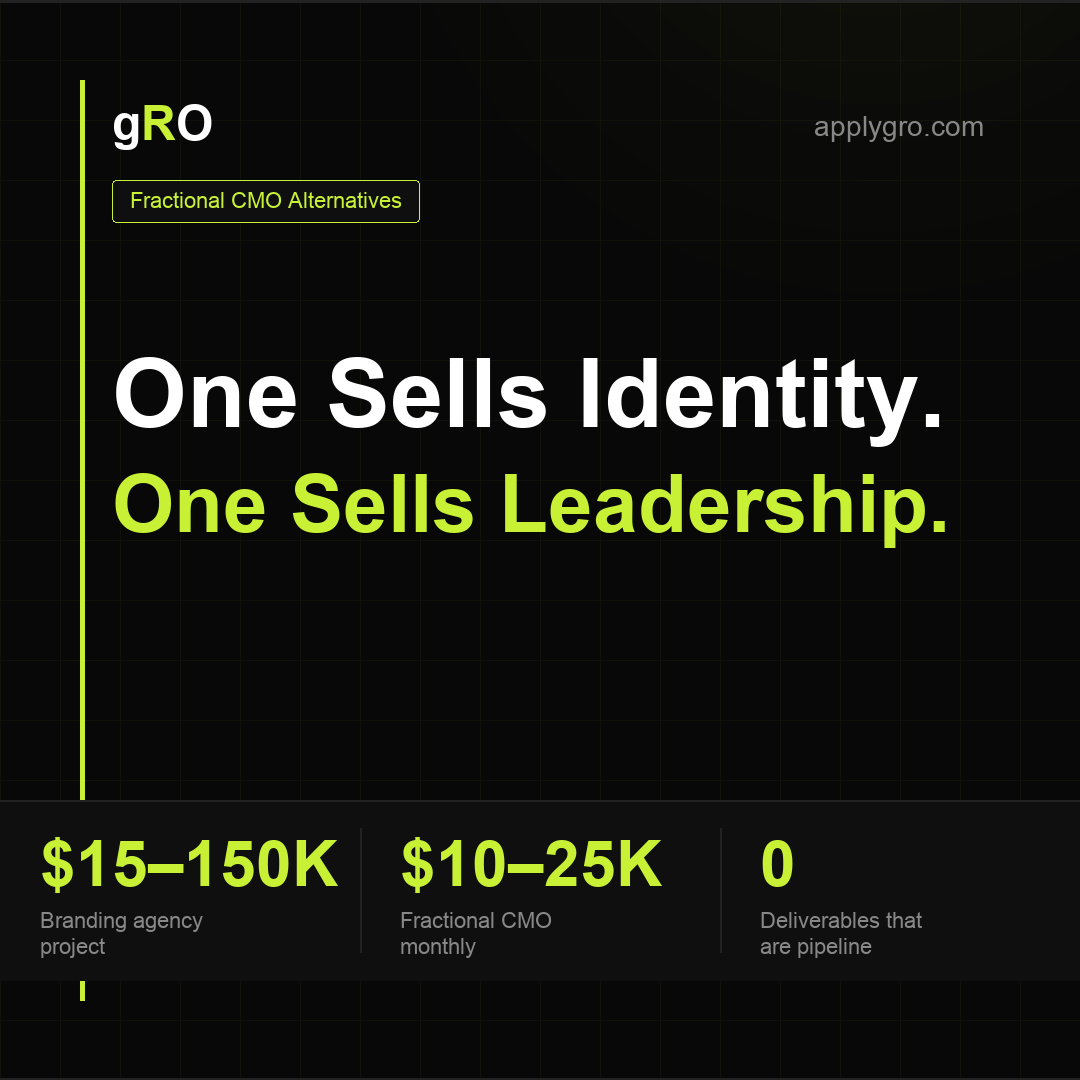
Fractional CMO vs Branding Agency: Two Different Jobs.
One sells identity ($15K–$150K per project). One sells leadership ($10–25K/mo). Neither sells pipeline. How to tell a brand problem from a funnel problem — before spending an order of magnitude on the wrong fix.